



Two students in white lab coats looking down at a tablet screen on a lab bench.

Physics

Build a strong foundation in physics through coursework in mechanics, physical systems, experimentation, and advanced laboratory study.

SCIENCE

 Physics Minor at William Jewell

The Physics minor gives students from other disciplines the opportunity to develop substantial knowledge of physics while complementing their primary field of study. Students build foundational and upper-level skills through coursework and laboratory experiences.

Billy J. Bird, the William Jewell College mascot, posing with wings spread open, framed in a circular cutout with campus trees and a red phone booth in the background.

Interests & Attributes:

  • Analytical Problem-Solvers
  • Hands-On Learners
  • Adaptable Thinkers

Goals for Student Learning

Students develop a foundation in physics through coursework in mechanics, physical systems, and scientific problem-solving. Foundational courses introduce students to the principles and mathematical approaches used to understand physical phenomena.

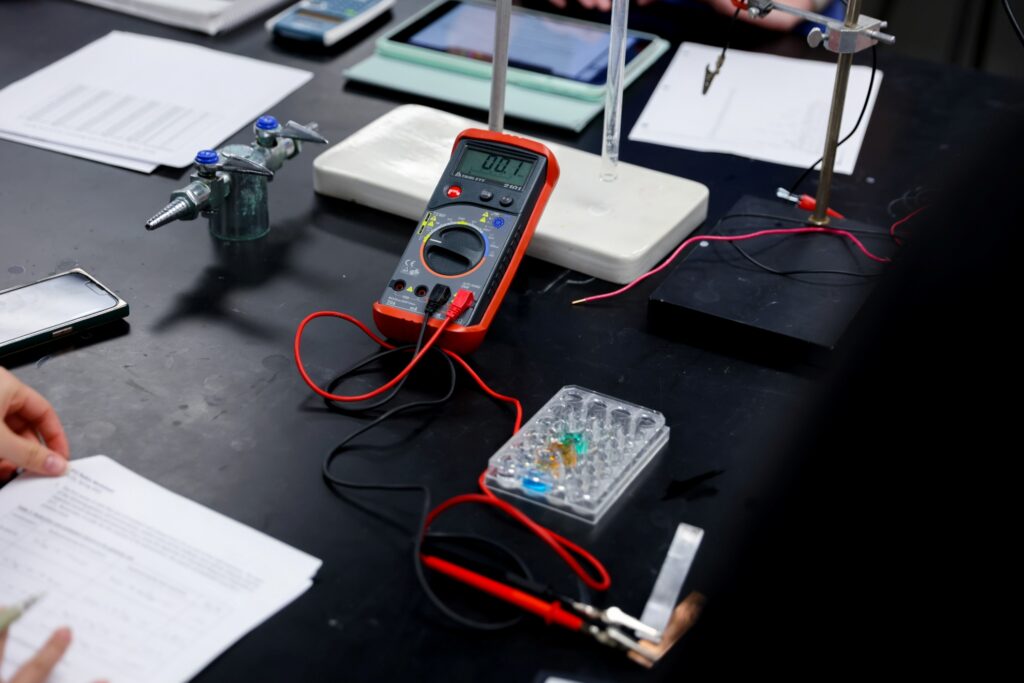
Students strengthen their ability to collect, analyze, and interpret experimental data through laboratory experiences. Upper-level coursework gives students opportunities to apply physics concepts to more complex problems and investigations.

Students also develop skills that complement their primary field of study, making the minor particularly useful for students pursuing majors in science, engineering, mathematics, and other quantitative disciplines.

More About The Minor

The Physics minor requires 18 hours of physics coursework, including introductory physics with laboratory experiences and at least 8 hours of upper-level physics coursework. At least one upper-level laboratory is required.

The minor can be tailored to a student’s academic and career goals in consultation with a physics faculty member. Students majoring in chemistry, biochemistry, or civil engineering complete additional upper-level physics coursework because of overlap between their programs.

Beyond Jewell

Engineering Physics prepares students to apply physics and engineering principles to technical challenges across a range of industries. Graduates can pursue careers in engineering, research, technology, manufacturing, energy, aerospace, and other fields that rely on strong quantitative and analytical skills.

The major also provides a strong foundation for graduate and professional study. Students may continue into engineering programs, graduate study in physics or applied science, or other technical fields that build on their background in mathematics, physics, computation, and experimentation.

Find Your Place at William Jewell